September is CVI Awareness Month
A New Tool for Spotting Infant Vision Loss Is Now in Use Across East Texas
How one training this summer put 24 screening kits, and the people trained to use them, into communities from Texarkana to Livingston.
East Texas Lighthouse for the Blind | September 2026
Cortical visual impairment (CVI) is the leading cause of visual impairment in children, and it is easy to miss. Unlike most vision problems, CVI is caused by how the brain processes what the eyes see, not by the eyes themselves. A baby with CVI can pass an eye exam and still have significant difficulty seeing.
That is why infants and very young children so often go unidentified, and why professionals across Texas who work with children who are blind or visually impaired have been concerned about the gap for years.
Several years ago, that concern met a possible answer at the annual conference of the Texas Association for Education and Rehabilitation of the Blind and Visually Impaired (TAER), the statewide gathering of Texas vision professionals.
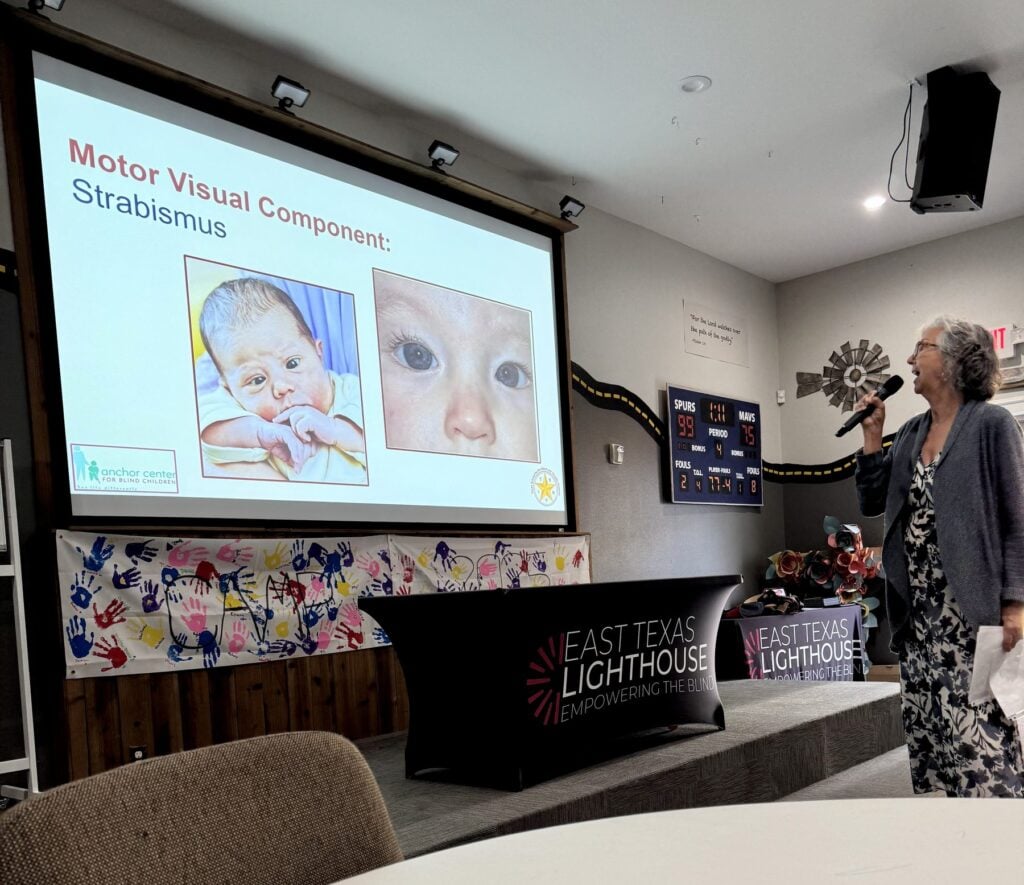
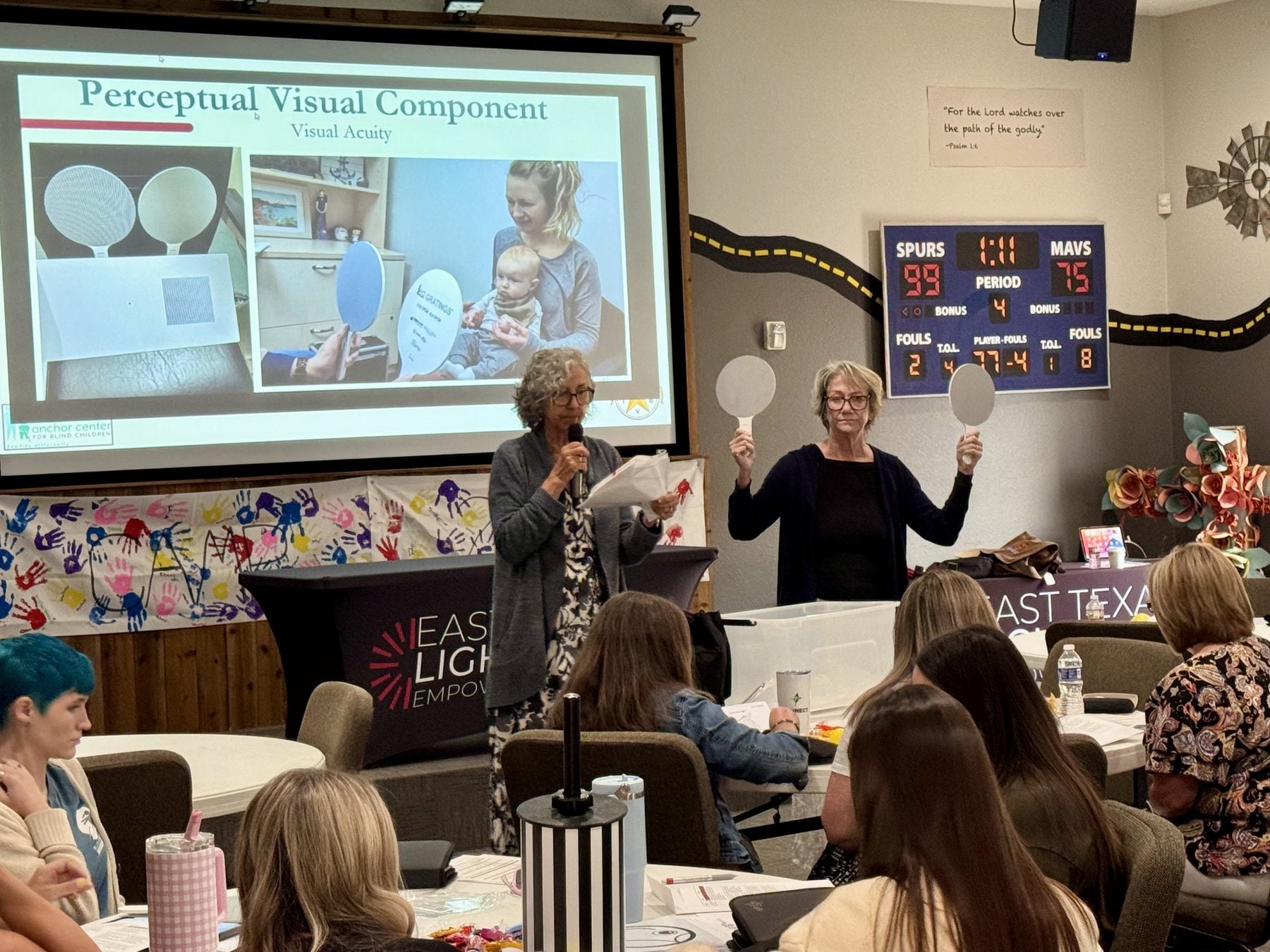
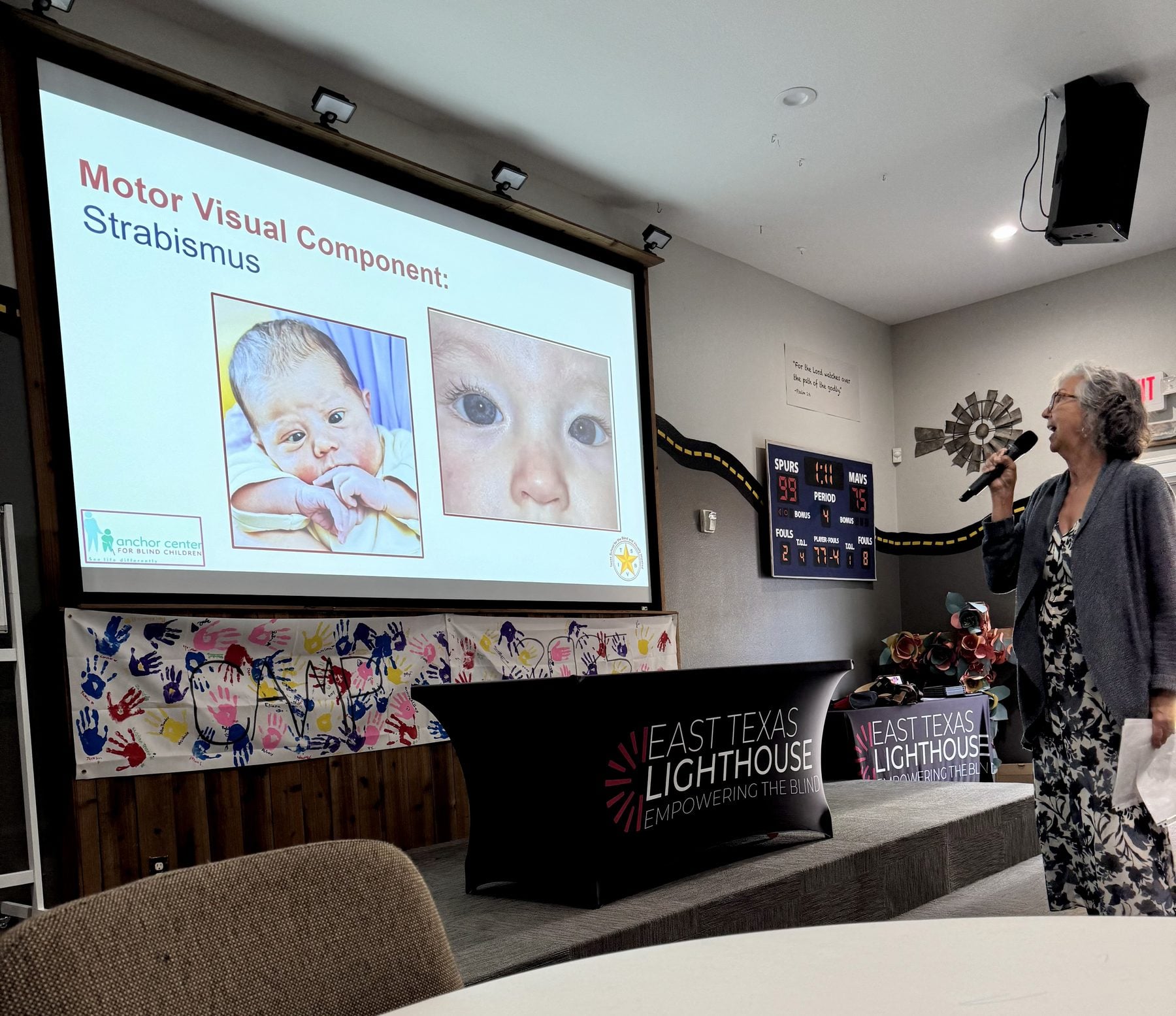
Lannette Burlingame, Program Manager at East Texas Lighthouse, was working at Region 7 Education Service Center when she attended a breakout session presented by Anchor Center for Blind Children in Denver. The topic was the Neonatal Assessment Vision European Grid (NAVEG), a short, non-invasive screening that a trained provider can administer to a baby in a single visit, using a kit of simple visual targets to check how the infant responds to light, contrast, faces and movement. The result is a score that tells the provider whether the child should be referred for further evaluation. It is validated for babies from birth to 12 months.
She wasn't the only Texan in the room paying attention. Professionals from the Texas School for the Blind and Visually Impaired (TSBVI) were there, along with representatives from education service centers around the state.
“Everyone in the room instantly knew that this could be the answer to the lack of identification of our infants and small children with visual impairments.”
Lannette Burlingame, Program Manager, East Texas Lighthouse
From a Conference Session to a Training in East Texas
TSBVI kept pursuing it. The school sent staff to Anchor Center to become certified NAVEG trainers and has since taken the training to regions across Texas. Their article, CVI Screening Tool Promotes Early Identification (opens in a new tab), tells more of that story and makes the case for earlier identification.
Lannette had planned to bring the training to Region 7 once it was available in Texas. By the time it was, she had joined East Texas Lighthouse. The idea came with her. She reached out to TSBVI and asked whether a community organization like the Lighthouse could host a NAVEG training.
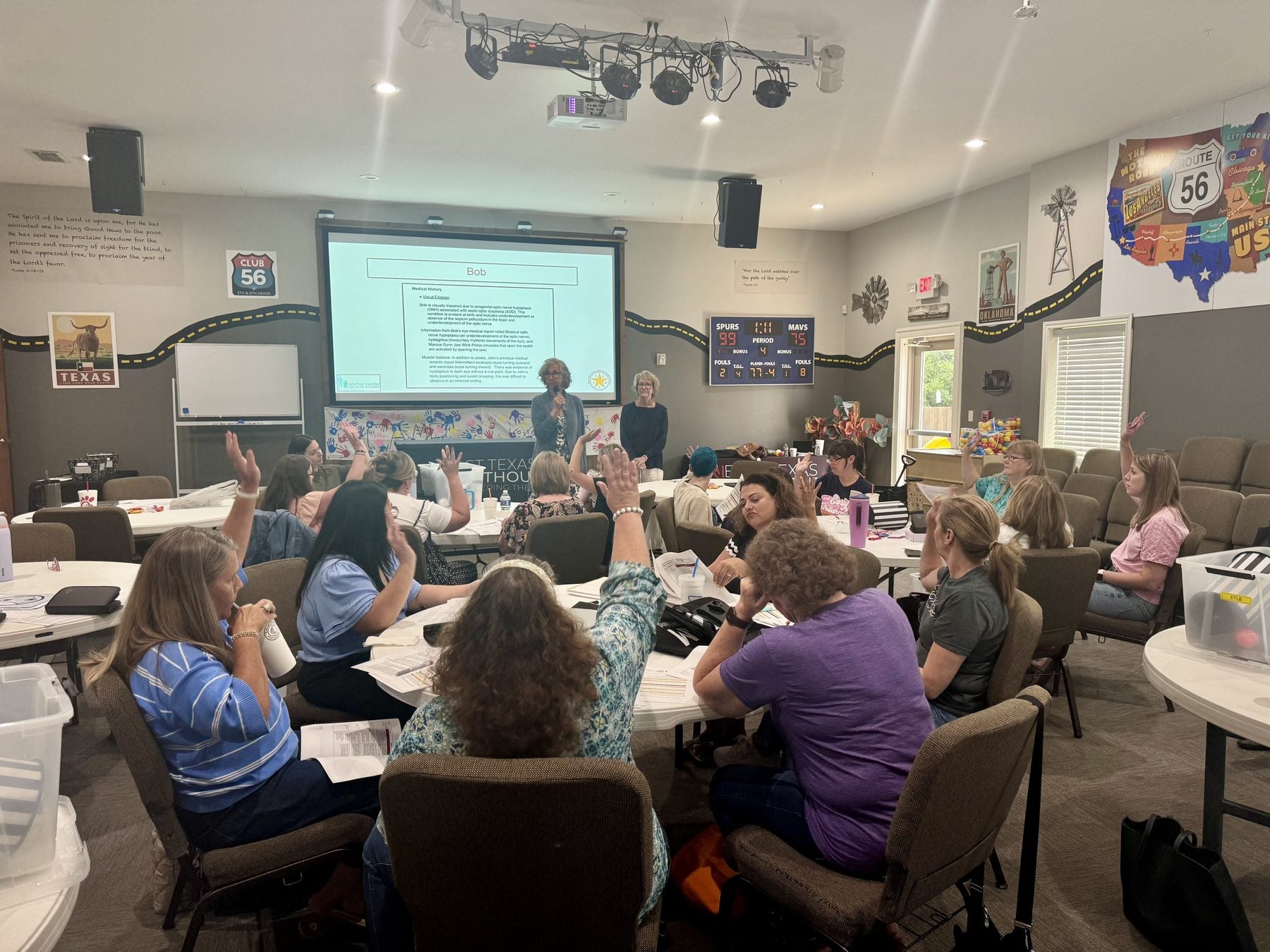
This July, it did. East Texas Lighthouse and Region 7 partnered to bring TSBVI's NAVEG trainers to East Texas for a two-day workshop — and that's where this story becomes much bigger than a training event.
Putting the Tools Into Communities
Twenty-seven professionals participated: teachers of students with visual impairments, certified orientation and mobility specialists, occupational and physical therapists, and Early Childhood Intervention (ECI) providers, who serve families of children under three. Together they represented 19 school districts, four shared-service arrangements, two universities, a pediatric therapy provider and six ECI offices — a footprint that covers the eastern portion of Texas from Texarkana to Livingston.
We didn't want participants to leave with knowledge alone. Region 7 funded 15 NAVEG screening kits for the participating school districts and shared-service arrangements. East Texas Lighthouse funded kits for the participating ECI programs and for Texas Tech University's program that prepares future vision teachers and mobility specialists, plus two additional kits that any organization without one can check out from the Lighthouse. Those kits are already being checked out.
In all, the partnership put 24 screening kits into use — an investment of more than $27,000, at roughly $1,100 per kit. Each contains the specialized materials needed to conduct the screening, including tools for assessing visual acuity, contrast sensitivity, visual tracking and other visual responses.
Just as important, this was a trainer-of-trainers workshop. Every participant can now go home and train additional professionals in their own district or agency to conduct screenings.
Six Families Volunteered
Six local families brought their infants for the hands-on portion of the workshop so participants could practice the screening with real children.
For some families, the results brought reassurance. For two, the screenings identified concerns that warranted further evaluation for possible CVI. A screening is not a diagnosis; it is a signal that a child may need a closer look.
What happened next is one of the best arguments for doing this work together. After each screening, Lannette and a TSBVI staff member sat down with the parents to explain the results. For the two families whose babies showed areas of concern, they could do more than say “seek additional help.”
The help was already in the room. ECI providers and vision professionals attending the training connected directly with the families and began walking them through the referral process and the resources available to them. Lannette remembers watching one mother's anxiety begin to ease as she realized there were people ready to help her child.
Our Impact Can't Stop at Our Front Door
East Texas Lighthouse directly serves people who are blind or visually impaired every day, and that will always be central to our mission. But we believe our responsibility, and our opportunity, is bigger than the number of people we can serve ourselves. Sometimes impact means bringing together educators, therapists and early-intervention professionals, putting new tools in their hands, and sending them back into communities across East Texas equipped to identify a child who might otherwise have been missed.
That's why partnerships like this one matter. Anchor Center advanced the work. TAER gave professionals a place to discover it. TSBVI invested in bringing NAVEG expertise to Texas. Region 7 and East Texas Lighthouse worked together to bring the opportunity to our part of the state. Cross Pointe Church in Flint provided the training space. Professionals, universities, school districts, ECI programs and local families all showed up. No single organization could have created the same impact alone.
“We don't need to work in silos. Educators, healthcare workers and agency personnel must collaborate with one another to identify and serve infants and young children with visual impairments.”
Lannette Burlingame, after the training
One Training Becomes Something Bigger
The success of this training won't be measured by the 27 people who attended in July. It will be measured by what happens next: more professionals who know what to look for, more infants with access to screening, more families connected to resources, and more children with visual impairments identified early enough to get the support they need.
One training. Twenty-four screening kits. Professionals reaching communities across East Texas and beyond. And a ripple effect that is only beginning.
Learn More
- TSBVI: CVI Screening Tool Promotes Early Identification (opens in a new tab)The story of how NAVEG came to Texas and why early identification matters.
- Anchor Center for Blind Children: NAVEG and CVI services (opens in a new tab)The organization that brought NAVEG to the U.S. and trains providers to use it.
- Texas Association for Education and Rehabilitation of the Blind and Visually Impaired (TAER) (opens in a new tab)The statewide professional association whose conference started this work.
- Find your local Early Childhood Intervention (ECI) program (opens in a new tab)Texas HHSC search tool for families with children under three.
- East Texas Lighthouse for the Blind — 888-565-3852Contact us to check out a NAVEG screening kit or ask about resources for your child. info@etxlighthouse.org